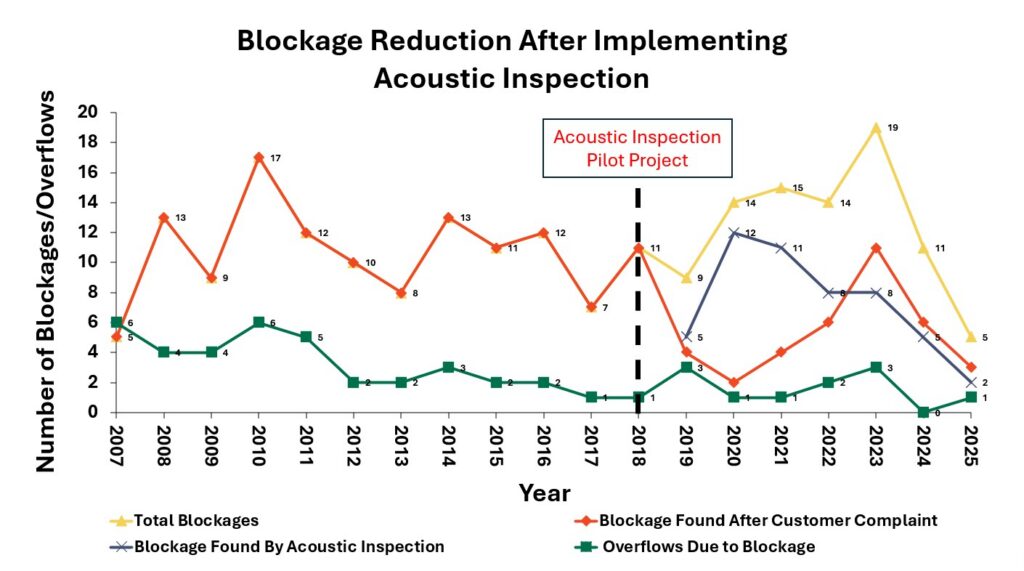
Lancaster Sewer Authority serves approximately 40,000 ratepayers and maintains 800 miles of gravity sewer infrastructure. Like many utilities, they faced a common challenge: sewer blockages were typically identified only after customer complaints were received. Over a ten-year period, Lancaster averaged approximately 10 blockages annually, resulting in an average of three sanitary sewer overflows (SSOs) each year. Utility staff recognized that responding to problems after they occurred was neither efficient nor sustainable.
Lancaster understood that blockages are inevitable, but identifying them before they became service disruptions was far more difficult. Traditional inspection methods such as CCTV provide valuable information but can be costly and time-consuming to deploy across an entire collection system. Without scalable condition data, maintenance decisions were often based on schedules, historical experience, or customer reports. The utility needed a practical way to gain visibility into pipe conditions and prioritize resources based on actual system needs.
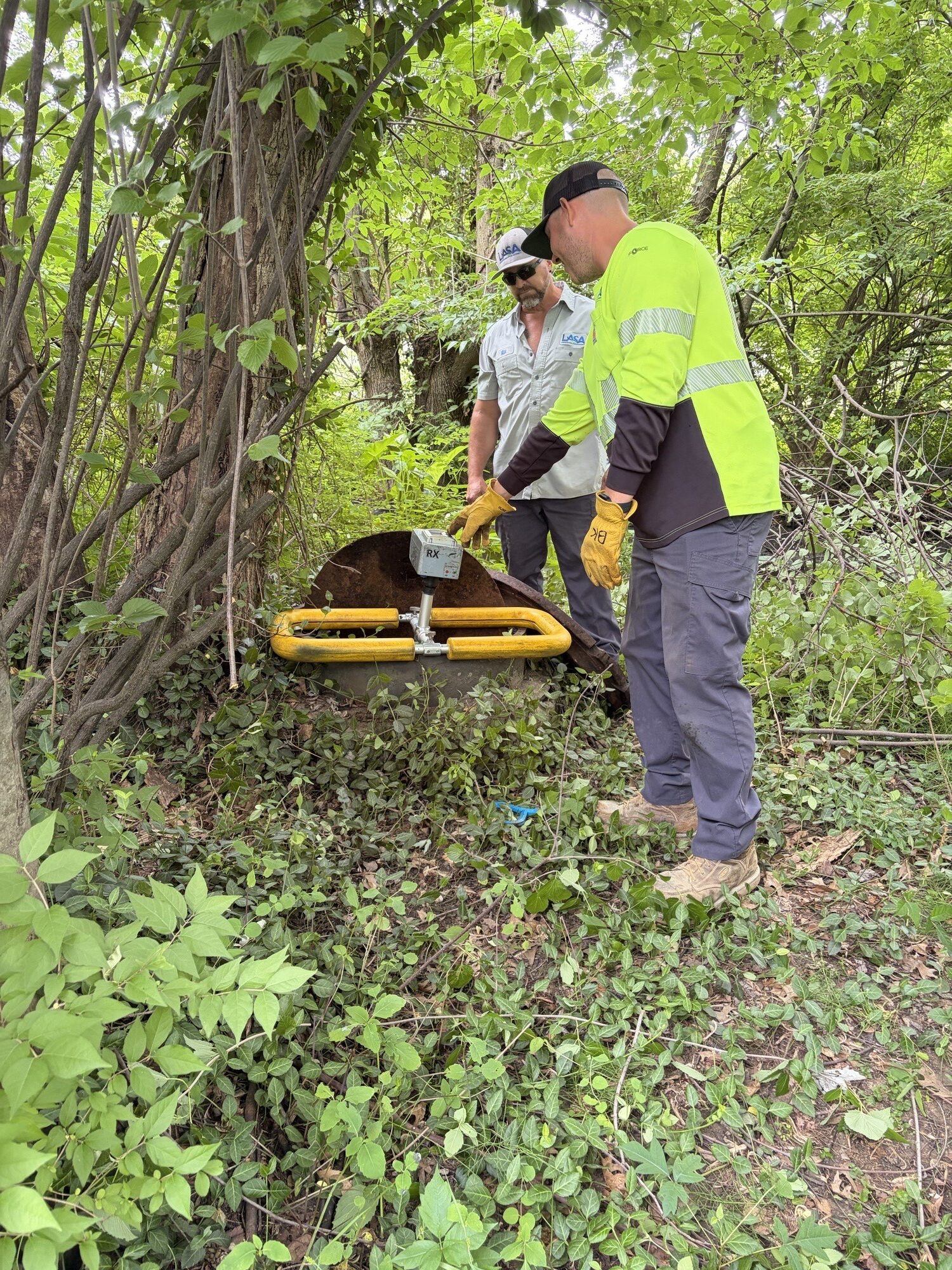
After evaluating acoustic inspection technology, Lancaster launched its SL-RAT® program in 2018 with a pilot covering approximately 100,000 linear feet of sewer. The results showed that only 5% of inspected pipe segments had significant blockage concerns, confirming that most of the system was operating in good condition. Building on the success of the pilot, Lancaster expanded inspections to approximately 385,000 feet in 2019 and more than 500,000 feet annually beginning in 2020. The additional condition data allowed crews to focus cleaning and follow-up inspections on assets that truly required attention.
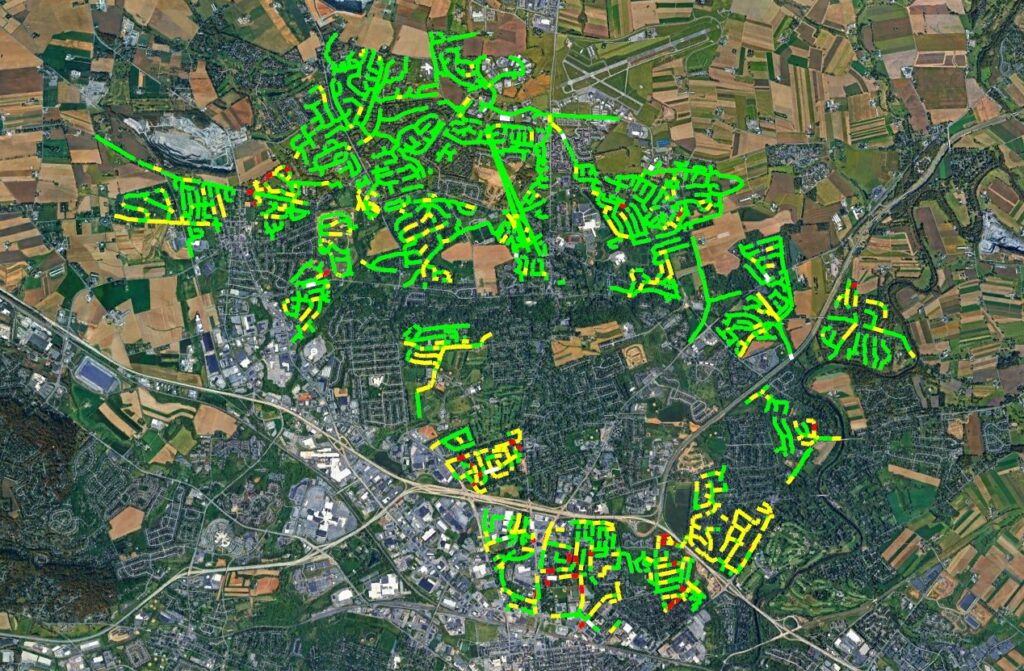
Since implementing its acoustic inspection program, Lancaster has inspected more than 4 million feet of gravity sewer and fundamentally changed how it manages blockages. More than half of identified blockages are now discovered proactively before customers report issues, contributing to a 42% reduction in blockage-related SSOs. The utility estimates that using acoustic inspection instead of system-wide CCTV screening has saved millions of dollars in inspection costs while reducing unnecessary maintenance activities. The program has also saved more than 1,800 workdays and conserved over 14 million gallons of water by helping crews avoid cleaning pipes that were already functioning properly.